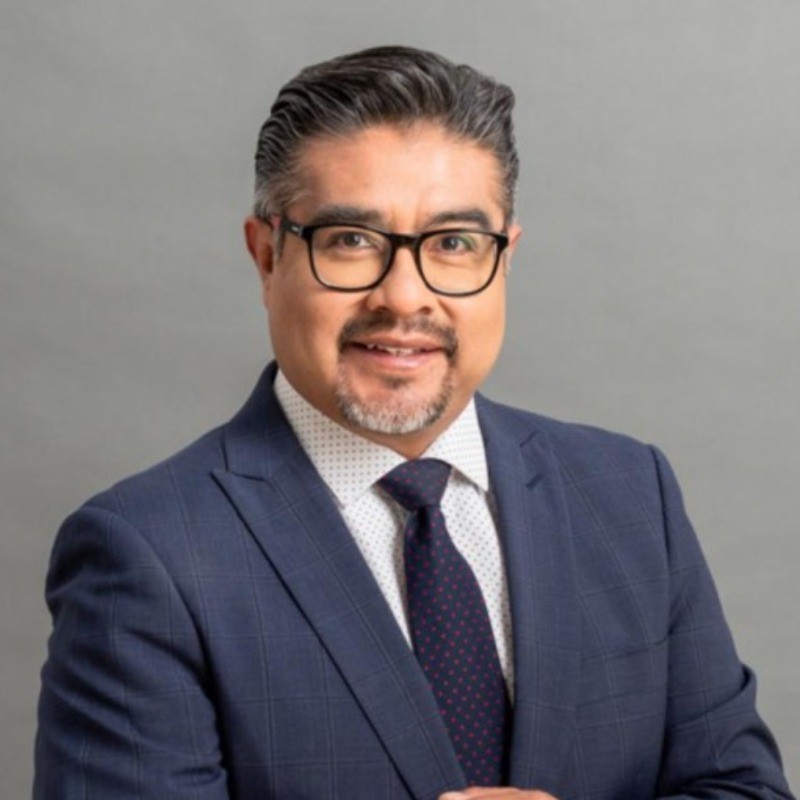
Edson spent years running field service operations in Mexico. At the peak he had 40 people reporting to him, 30 of them engineers spread across the country, and a service P&L he carried himself, running somewhere between 1.7 and 3 million dollars a year. He worked across diagnostics and life sciences companies, Thermo Fisher among them, in plants and laboratories all over the country.
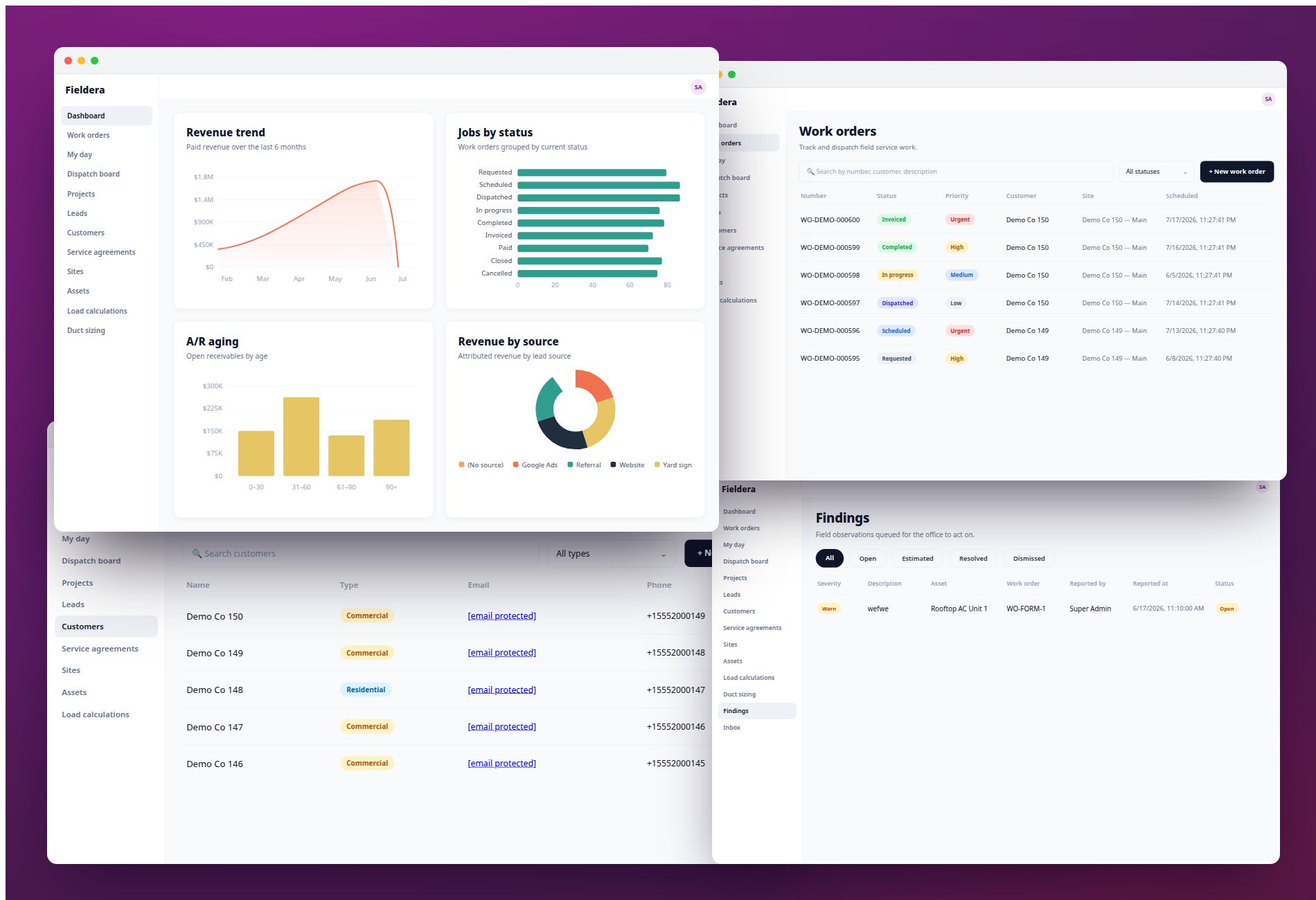
Rodion Salnik is building Fieldera, an FSM platform designed around how field operations actually run. He sat down with Edson to understand how field teams buy, live with, and eventually replace their software. Edson has since left corporate life. He runs a family coffee shop now, and he is working through Azure AI certifications in his spare time. That distance made him candid. Here is what he said.
The software kept changing underneath him
Edson didn't run one system. He ran four, one after another.
"The first software I managed was Solar Vista," he said. An English product, implemented at Thermo Fisher Mexico back around 2010. "People from Great Britain came to Mexico to train us."
Then he moved to a company that was running SugarCRM for tickets. He didn't keep it.
The reason I stopped paying Sugar was the integration of the inventory. Many companies do not want to invest time in service. They want to continue doing operations, sell the consumables, sell spare parts. But they don't want to spend time integrating the service.
The next step was Oracle, for a simple reason. The company already owned it. "When I saw that we had Oracle, I told the managers we could include Oracle for Service."
Oracle had its limits. "The platform of Oracle is limited in terms of what you can see and how you manage the processes," he said. So he layered Salesforce on top. "Oracle and Salesforce could work together. We can extract the database from Oracle and use the front end of Salesforce to have all the information."
Four systems, each one a patch for what the last one couldn't do.
The integration nobody wants to pay for
The thread running through all of it was connection. Service orders sitting in one place, the company's financial system sitting in another.
That's one of the problems we have in service organizations in Mexico. How do we connect the service orders with the server of the company? There are so many local programs to manage a company in terms of financial and invoices.
When he listed the priorities for his Salesforce implementation, the order tells you what mattered to him: reduce the time engineers spent capturing service orders, give customers more of the information held in those orders, cut customer support time, and pull the financial processes in. Travel expenses. Invoices. The parts that usually live outside the field software.
The dashboard he built by hand
For all the corporate machinery, the last mile stayed manual.
I was building the dashboards in Power BI. Regularly we need to update the KPIs, so all these attachments were made manually after I export the data. I refresh the Excel spreadsheet to generate the dashboard. It was an incomplete process. It was in the last stage, but I did not complete it.
So the reporting that ran a multi-million dollar P&L came down to exporting data and refreshing a spreadsheet by hand, every cycle.
Corporate software on a 40-person team
Salesforce and Oracle are built for organizations far larger than 40 people. Asked whether that was a lot of software to carry, Edson didn't soften it.
"It is complex," he said. "I needed to change the processes. First you define what you want to achieve."
The harder part was the people. Many of his engineers had spent 20 years in the field without ever touching a digital tool.
Imagine, after 20 years, people who do not use a computer regularly now have to use it.
And the ground was already shifting again, toward AI tools that those same engineers would need to learn next.
The pain that comes after you sign
When Rodion asked him directly what service companies are least happy with in their software, Edson answered with one thing.
The technical support from the software company, it is too expensive. If you do not plan already what you want at the beginning, it costs to do something different. Small changes, it's expensive. If you want to change a task accordingly to what the staff is doing, small changes are expensive.
Changes that match how the work actually gets done, the small adjustments field teams need constantly, are the ones that cost the most and take the longest.
This is the design problem Fieldera starts from. Field operations are a living process. The software has to move with them, or the team finds workarounds, and then more workarounds, and eventually a new system.
How field software actually gets bought
Edson was clear about the money side too. The way to sell into this market is rental, paid monthly.
The easy way is pay per month. Instead of using CapEx money, you can use OpEx, the operations spend per month. A huge investment takes very long, one year at least, and we need a lot of approval from corporate. So it is necessary to work in a rental system to generate sales in that market.
The map of Latin America
Rodion asked what makes one market different from another. Edson's answer started with tax.
"The rules of taxes are different in every country," he said. "You need to take special time analyzing how every country manages taxes."
One country stood out as the hardest.
In Brazil they have a lot of restrictions in terms of taxes. The rules in Brazil are so different. The most difficult country to do business in terms of software is Brazil.
And one stood out as the most mature.
Chile has very good platforms. They develop software. Chile is a unique country in Latin America that understands software at a very high level.
Mexico, he put in second place. Below the big companies, the picture changed entirely. "In small and medium companies, they do not use software. Only spreadsheets."
Where it lands
Edson's story is one operations manager's experience, in one region, across four systems and two decades. But the shape of it travels. The software that gets bought to run field work struggles to keep up with how field work actually changes, and the bill for closing that gap shows up long after the contract is signed.
Fieldera is being built around exactly this pattern. The platform is in its early stages, and conversations like this one are what keeps the direction honest. If your field operation looks like Edson's, Fieldera is looking for design partners to build with. The conversation starts at fieldera.ai.
Fieldera is a field operations platform built by Brocoders, configurable to your exact dispatch rules, contractor processes, and compliance requirements — deployed in weeks, not months.
Talk to us about your operation →